
What?
On 1 January 2025, the Federal Law on Combating Abusive Bankruptcy will come into force. What may seem like a technicality is, above all, a real wolf in sheep’s clothing for companies in financial difficulty. The personal liability risk for the directors increases.
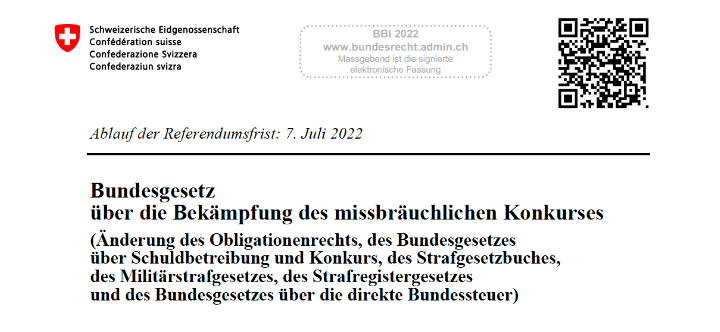
Why? Today, public creditors (tax authorities, social security institutions, etc.) cannot file for the bankruptcy of a company, only for its attachment. Companies that are unable to pay social security contributions or taxes on time do not have to expect to be driven into bankruptcy immediately. Private creditors can demand bankruptcy, but often do not do so because they have to make an advance payment for the bankruptcy costs and it is often not worthwhile for them.
In the new year, public creditors will also have to enforce their claims by way of bankruptcy proceedings, just like private creditors. So if the company has debts with the Social Security Office or the Federal Tax Administration (VAT), it will now be sent bankrupt. It is to be expected that the authorities will actually do this, as they are committed to strict debt collection and do not have to worry about the costs of bankruptcy proceedings.
It should also be noted that the authorities have a fast procedure for the legally binding determination of a claim (final legal opening according to Article 80 paragraph 2 SchKG). The company therefore has little opportunity to delay the proceedings.
So we can expect significantly more bankruptcies in the future!
So What?
In the event of bankruptcy, the risk of the company’s directors being held personally liable (under civil, i.e. financial, criminal or administrative law) increases exponentially:
– In particular, the directors are subject to very strict personal liability for unpaid social security contributions under Article 51 of the pensions act
– The aggrieved shareholders and creditors can also hold the directors personally liable.
– Public prosecutors can pursue criminal charges for various economic crimes (e.g. also for delaying bankruptcy), and professional bans can be imposed.
– If COVID loans are still outstanding, special liability risks arise (again, both financial and criminal) if improper use of the funds received can be seen.
Do What?

While today the claims of the public sector have often been put on the back burner and priority has been given to employees, banks and suppliers, such government claims must now be the focus of attention. If it is foreseeable that these cannot be settled in due time, negotiations for a payment plan must be started in good time.
One of the conditions for successful negotiations with the authorities on a payment plan will undoubtedly be that the company fulfils its administrative obligations (timely settlement of contributions and taxes based on proper accounting). A chaotic accounting system or delays in settling accounts will reduce the goodwill of the authorities and lead to suspicions of fraud!
 entrepreneurlaw.blog